The main mistake when buying a new or used motorcycle.
We all worry about the brand, the model, the engine size, the components, but there's one thing that almost no one takes into account, and it's one of the most important: The shock absorber.
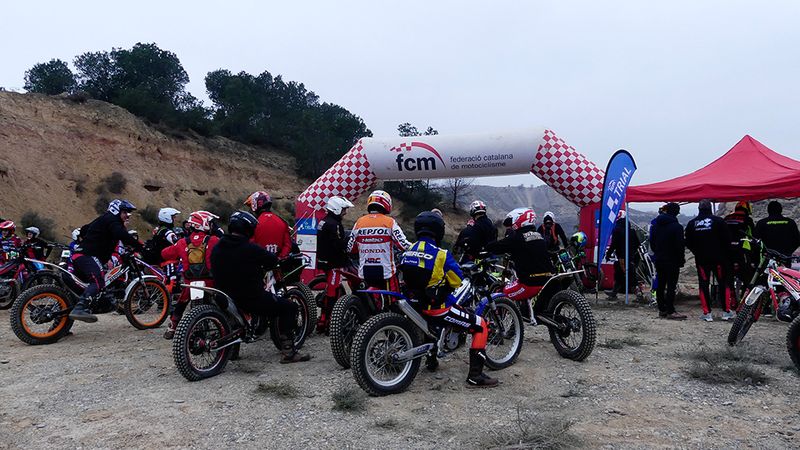
A standard trials bike is configured for a rider weight of 70kg (rider + equipment), and the reality is that often the shock absorber settings aren't suitable for us, neither in terms of weight nor setup. Each brand has its own settings, but we'll explain what you should keep in mind:
- Check that the linkage assembly is in good condition.
- Install a spring appropriate for your weight
- Low preload, less "tension" on the spring, not exceeding 8mm of preload. If you go too far with preload, the spring will be too compressed, you'll lose traction, and the bike will bounce too much.
With this, we already have a good base for adapting a shock absorber to a rider's weight.Now comes the second part, the hydraulics, which we'll configure with these 3 variables: the type of terrain you train on, the rider's skill level, and personal preference.
The damping setting on a shock absorber is the speed at which the spring reacts. We talk about closed settings when compression and rebound are slow, and open settings when compression and rebound are fast.
This value isn't always configurable on all motorcycles; some shock absorbers have a compensator, and you adjust these two values together.
• If you have a shock absorber with open compression and rebound, you'll have a more responsive motorcycle, making it easier to shift gears and jumps—ideal for experienced riders.
• If you have a shock absorber with closed compression and rebound, you'll have a more stable motorcycle with more traction—ideal for beginner/intermediate riders.
This is a "starter setting," but if you want to fine-tune your shock absorber, we recommend bringing your motorcycle to our workshop, and we'll offer you a custom setup.
Other related articles
 July 25, 2024
Metric 4 Air Suspension Test
We have tested the new Metric 4 air suspensions, a suspension that … May 9, 2024
Three different ways to climb the same step
Many times. We find that we can climb the same obstacle in … April 17, 2024
Air Filter Maintenance by Jorge Casales and Sil Lubricants
We talk about the importance of maintaining the air filter. How often … March 21, 2024
TRRS Clutch Upgrade Kit 2018-Current
Jorge Casales explains how to install this kit to improve and smooth … July 4, 2019
Opinions of our clients
Receive our news